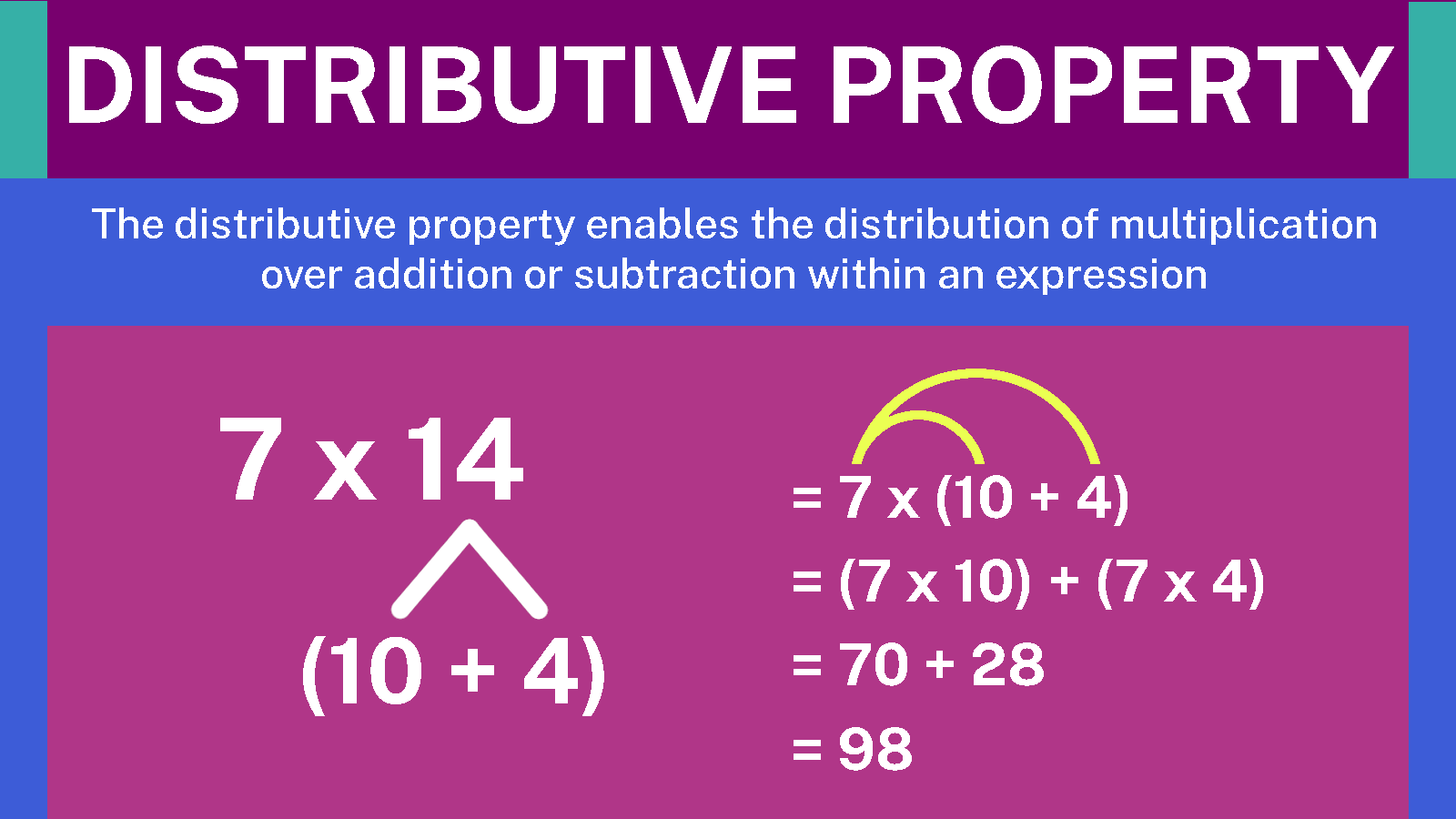
Here’s the secret formula: a x (b + c) = (a x b) + (a x c). Don’t panic. It’s just a way to say, “I can spread multiplication across addition.”
Think of it like this: You have 3 baskets. Each basket holds 4 apples and 2 oranges. How many fruits total? You could count 4 + 2 per basket, then multiply by 3. That’s 3 x (4 + 2).
Or you could be a fruit-counting genius. Count all apples first (3 x 4 = 12), then all oranges (3 x 2 = 6), and add them. Boom. Same result—18 fruits. You just distributed the 3.
Why Is This So Weirdly Fun?
Because it sneaks up on you. You use it all the time without noticing. Ever figured out a tip at a restaurant? That’s the distributive property.
Your bill is $24. You want a 15% tip. You calculate 10% ($2.40) plus 5% ($1.20). That’s just 0.15 x 24 = (0.10 x 24) + (0.05 x 24). You are a math ninja in a diner.
It’s also why your brain can do 7 x 52 in two seconds flat. You secretly think: 7 x 50 = 350, plus 7 x 2 = 14. Total: 364. You didn’t even break a sweat.

